Showing posts with label architecture. Show all posts

Sunday, 13 October 2024

Places to Visit in Bhutan: Punakha Dzong

At the Punkha Dzong, Bhutan

Punakha is a stunning valley in Bhutan that offers a unique blend of natural beauty, rich history, and spirituality. Punakha is located in the western part of Bhutan, approximately 77 kilometers northeast of Thimphu, the capital city and 125 kms from Paro, the nearest International Airport. The valley is situated at an altitude of 1,200 meters above sea level and the climate is mild and temperate, with warm summers and mild winters.

Punakha is home to numerous iconic landmarks and attractions that display its rich cultural heritage like the Punakha Dzong, Chimi Lhakhang, Khamsum Yulley Namgyal Chorten, Punakha Suspension Bridge etc.

Confluence of Pho Chhu & Mo Chhu rivers adjacent to Punakha Dzong

Perched strategically at the confluence of the Pho Chhu (male river) and Mo Chhu (female river) rivers, Punakha Dzong is one of the most iconic and revered landmarks in Bhutan. (Dzongs or forts are typically Bhutanese and Tibetan architecture and normally have a mix of fort and monastery within it) After the confluence of these two rivers, the main river is known as Puna Tsang chu.

The majestic Punakha Dzong

This majestic fortress monastery, also known as Pungtang Dechen Photrang Dzong (Palace of Great Happiness), is a testament to the country's rich history, spirituality, and architectural prowess. Built in 1637 by Zhabdrung Ngawang Namgyal, the founder of Bhutan, Punakha Dzong served as the administrative and religious centre of the region. The Punakha Dzong played a pivotal role in the country's unification and has been the seat of Bhutan's government until 1955 when the capital moved to Thimphu.

Punakha Dzong is an exemplary example of Bhutanese architecture, displaying a unique blend of Buddhist and Tibetan influences. The dzong with walls up to 3 meters thick is reinforced with heavy wooden beams.

A vibrant courtyard at Punakha Dzong

The dzong's architecture is a testament to Bhutanese craftsmanship. Its intricate designs, vibrant colours, ornate carvings, and imposing structure are a remarkable sight.


Steep stairs at the entrance of the Punakha Dzong

The stairs at the entrance to the Dzong are extremely steep and one has to climb or descend carefully in order not to fall. Probably the steepness (probably they can be removed also) is for safety purposes as this is a fort.

One of the courtyards inside Punakha Dzong

The Punakha Dzong has a six-story central tower housing sacred relics and murals depicting Buddhist mythology including the Rangjung Kharsapani (Self-Created Image of Avalokiteshvara). It has twenty-one temples dedicated to various deities and Buddhist masters. 

Inside one of the temples at Punakha Dzong

In addition, it is home to over 500 monks, who reside and study within the Dzong's premises. The courtyards have intricate stone carvings and murals. The Dzong also serves as Administrative offices as though it is no longer the capital but as a District, it still has some administrative offices inside the complex.

In 1994, a devastating flood severely damaged the Punakha Dzong. A meticulous restoration project, undertaken by the Bhutanese government and international organizations, ensured the structure's integrity and authenticity. For example, the bridge you see over the river has been reconstructed with the financial and technical assistance of Germany.

The reconstructed bridge at Punakha Dzong

Dress modestly and remove shoes when visiting temples and monasteries. Persons wearing shorts, skirts, T-shirts without collars etc maybe denied entry.

Punakha Dzong is a truly remarkable place that offers a glimpse into Bhutan's rich history and culture. Its majestic architecture, stunning location, and historical significance make it a must-visit destination for any traveller exploring this Himalayan kingdom.

Also read:

Bhutan's Iconic Tiger's Nest: A Trek Through History and Breathtaking Vistas 


Dochula Pass: A Scenic Gateway to Bhutan

Monday, 4 February 2019

Places to visit in Narnaul: Shah Ibrahim’s Tomb


Shah Ibrahim’s Tomb, Narnaul

Most of the times while crossing Narnaul I do not make a detour and pass through this town without looking at the local attractions. However, this time I factored in couple of hours extra to visit few monuments which are the heritage of the area and architecturally important.

I decided to visit the Shah Ibrahim’s Tomb located in the Piran Mohalla of the town. To reach there either put on Google maps or ask for directions from a local as it is situated in the middle of a inhabited colony and there are no markers to guide you there.

When I reached there I was surprised that how well it has been maintained over the years as it has been built by Sher Shah Suri during 1540-45 in memory of his grandfather Ibrahim Khan Sur who died in Narnaul in the year 1518. The square structure made of red and grey sandstone is built on a platform and is entered from the east gate. The monument is surrounded on all sides by houses.

The tomb of Shah Ibrahim, Narnaul 

The structure is two storey high. On the ground level besides the main tomb of Ibrahim Khan Sur there are also few other smaller tombs as well. The light filters in through the trellised grills. 


One of the cupola at the Shah Inrahim Tomb, Narnaul

One can go up by means of narrow (and dark) stairs. On the second storey besides the main dome there are four cupolas giving the structure a symmetry and elegant look. One can get a 360 degree view of the city from here. 


The Pir Turkman Dargah as seen from the Shah Ibrahim Tomb, Narnaul

Close to the Shah Ibrahim’s Tomb is the Dargah of Pir Turkman. I was told that the building of the Pir Turkman predates the Shah Ibrahim’s Tomb by nearly 200 years! The buildings of the Pir Turkman though are in a dilapidated state.


The backside view of the Shah Ibrahim Tomb, Narnaul

An advice to the Archaeological Survey of India and to the Tourism department of the Government of Haryana is to provide road markers so that this important heritage site is easy to locate and reach.

Narnaul, a small town in Haryana, is about 170 km from Delhi on the Delhi-Rewari-Khetri route and can be reached by road in about three and half hours. It is also the district headquarters of Mahendergarh District

Also read:
Places to visit in Narnaul: Chor Gumbad
Dhosi Hills
Rural Tourism

Tuesday, 27 December 2016

Places to visit in Delhi: Safdarjung Tomb

Safdarjung Tomb viewed from the arch of  the entrance gate

The Safdarjung Tomb could be considered as the ‘last flicker of the lamp of Mughal architecture’ in Delhi. Though on a smaller scale, compared to the grandeur of the Humayun’s Tomb, it is still no less beautiful.

The entrance gate of the Safdarjung Tomb

There is an ornamental gate at the entrance. Also there is a three domed mosque on the right side of the entrance though it is not being maintained properly.

The three domed mosque at the Safdarjung Tomb Complex

Safdarjung Tomb was built in 1753-54 by Nawab Shujau’d-Daulah in memory of his father Mirza Muqim Abdul Mansur Khan or Safdarjung who was the Governor of Awadh under Muhammad Shah. 

Tomb of Safdarjung

Red and buff color sandstone has been used for construction of the tomb. Marble has been used for the flooring, inlay work and the dome.

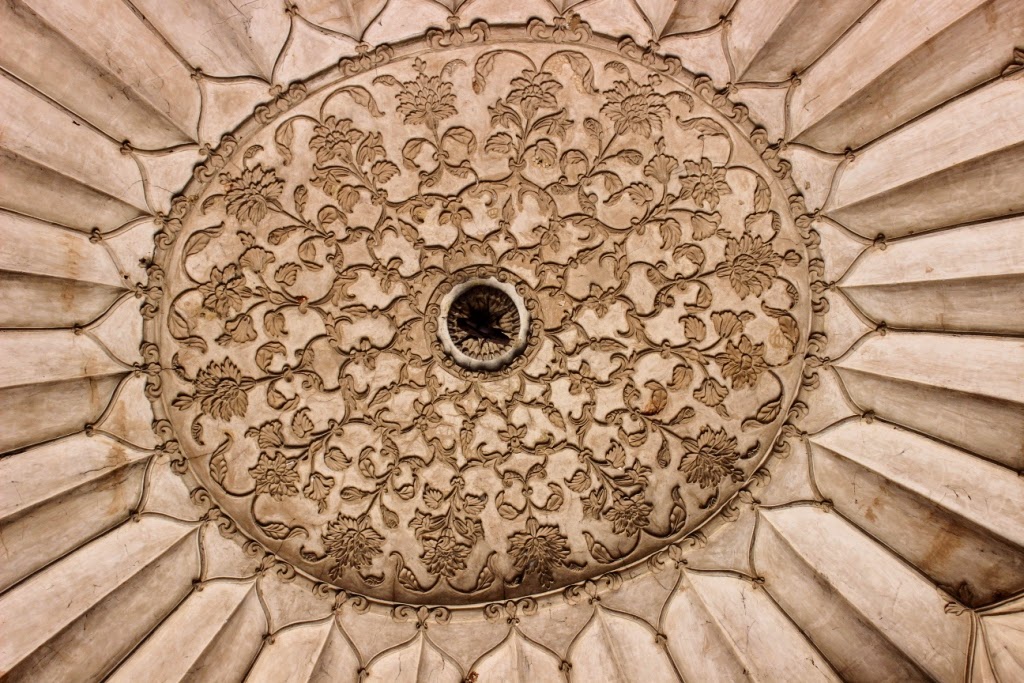
Floral pattern on the domes of the Safdarjung Tomb

The domes have interesting floral patterns. The tomb is encircled with beautiful and well maintained garden which is in the shape of Charbagh or quadrilateral garden.

The gardens, water channels and the pavallions at the Safdarjung Tomb Complex

The gardens are then surrounded by pavallions which were used as resting places. The Southern pavallion is called Badshah Pasand or the King's Choice, Northern one is Moti Mahal or the Pearl Palace and the Western side as Jangli Mahal or the Palace in the Woods.

The Safdarjung Tomb, Delhi

The Safdarjung Tomb is not very crowded compared to the Humayun Tomb so one can really enjoy the place at leisure. Since the ticket is not very exorbitant, I noticed lot of young couples sitting in the gardens who had no romance for the the monument but for each other only! Safdarjung Tomb is a protected monument of the Archaeological Survey of India (ASI).

Side view of the Safdarjung Tomb

I wonder why the ASI or other relevant authorities do not have some decent tea, coffee and snacks kiosks as people come from far off and would like to rest and spend some time at the monument. Also I did not see any ramps for the disabled to use wheel chairs.

Situated right next to the Safdarjung Airport (not a functional commercial airport) and very close to the Lodhi Gardens, Safdarjung Tomb is a must see place if one is interested in history and architecture. If you plan to go by the metro then the Jorbagh Metro station is the closest to the monument.

Also read:
Places to Visit in Delhi: Humayun Tomb
Places to Visit in Delhi: Qutub Minar, Alai Minar and the Iron Pillar
Places to visit in Delhi: Mirza Ghalib ki Haveli
Places to visit in Delhi: The Isa Khan’s Garden Tomb
Places to visit in Delhi: Ugrasen ki Baoli

Sunday, 30 September 2012

Tiuni, Uttrakhand

Tiuni is a small settlement on State Highway 1 in Uttrakhand and is about 34 kms from Jubbal (in Himachal). Pabbar river flows next to it.


Devladi Temple, Tiuni

On the way I stopped after seeing the beautiful architecture of this temple in Tiuni known as the Devladi temple. 

Huna Style of Architecture

It has the similar architecture as that of the Mahasu Temple close by which is more famous and built in the Huna architectural style. If you notice in the photo above you will notice that there are five levels of the ceiling on the extreme left then four and then three closer to the entrance of the temple.

River Pabbar

Pabbar is a distributory of Tons River which goes on to merge in Yamuna. The Pabbar river's water, except during monsoons, are greenish in colour and have its source in the glaciers. The drive along the river is on a narrow road dotted with pine trees and is very beautiful.

Another temple in the same style

There are several temples spread across the area similar in style. The Panadavas, mythologically speaking, escaped from Lakhamandal and came to this region. Lakhamandal  is in itself an architectural delight. 

Saturday, 16 October 2010

Lakhamandal- An Architectural Delight

Lakhamandal is a small place in Uttrakhand where  a temple of Nagara style was built in the 12th -13th Century AD and is devoted to the Indian god Shiva.

The Shiva Temple at Lakhamandal
 A large number of sculptures and architectural remains are also spread in the nearby area though only this temple has survived. 

Another view of the same temple
The Archeological Survey of India has unearthed several lingams (phallus) of various sizes indicating that this was an important site about 800 years back.

A sculpture at Lakhamandal


The place also has mythological importance and it is believed by many that a palace was built of 'Lakh' (shellac) to kill the Pandavas.

The Village of Lakhamandal with the temple in the background
The place also houses a museum which has recently been opened but is not very well maintained.There are for example no details mentioned about the period of the sculpture or any other detail. It was also not very well lit inside.
 
A typical house in the Village of Lakhamandal

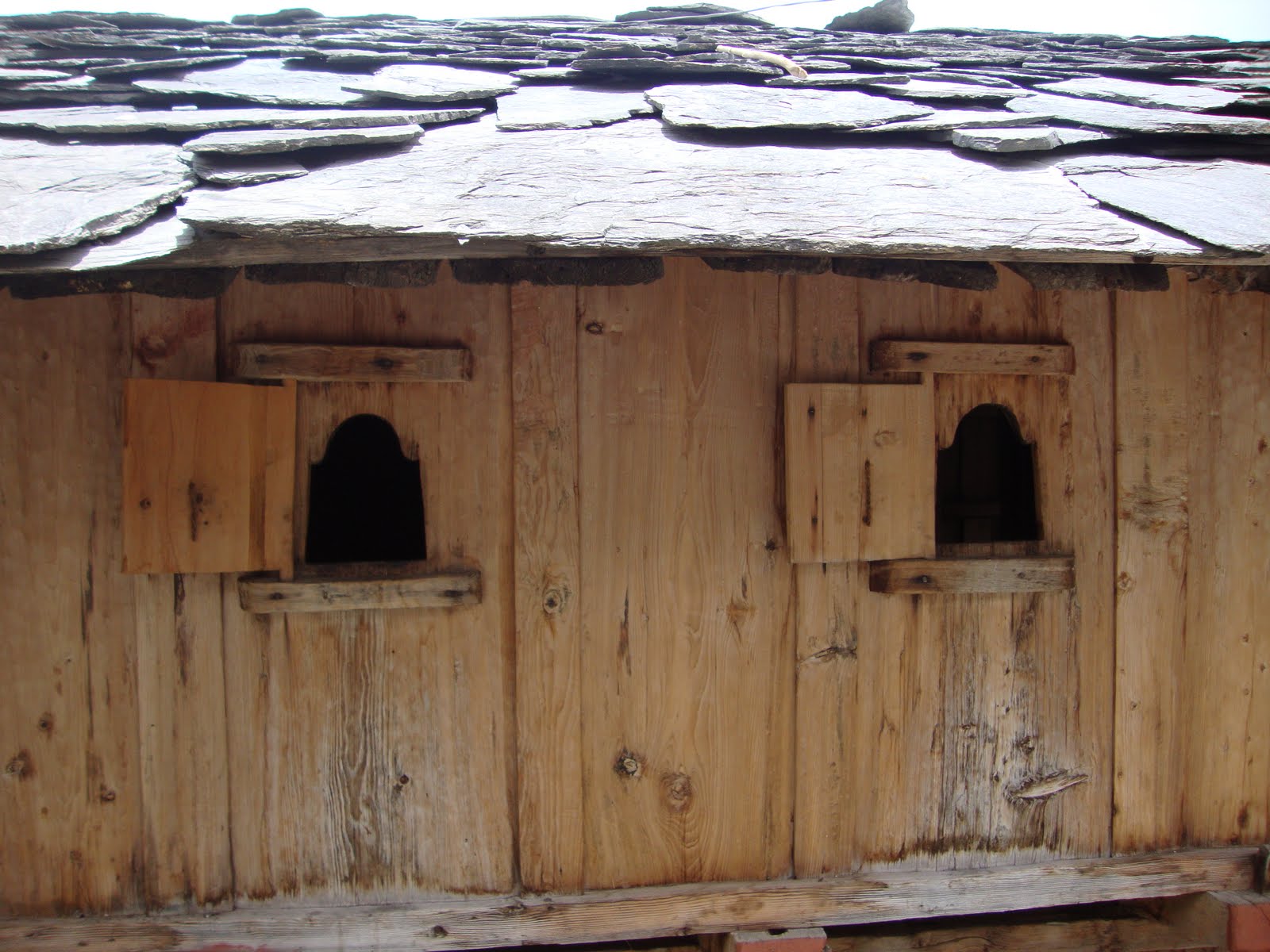
Little windows in the houses!
Lakhamandal is approximately 45 kms if you are coming from Chakrata side. Incidentally, once I had crossed Chakrata town I did not see another vehicle till I reached this place. So one has to be sure that your vehicle is in good shape and the petrol tank is full. The road, though metalled, is not in very good shape. And though there are several villages enroute, surprisingly, there is no bus service in this part of Uttarakhand. Compared to this one can get a state road transport corporation bus in almost all remote areas of Himachal.