Saturday, 16 October 2010

Lakhamandal- An Architectural Delight

Lakhamandal is a small place in Uttrakhand where  a temple of Nagara style was built in the 12th -13th Century AD and is devoted to the Indian god Shiva.

The Shiva Temple at Lakhamandal
 A large number of sculptures and architectural remains are also spread in the nearby area though only this temple has survived. 

Another view of the same temple
The Archeological Survey of India has unearthed several lingams (phallus) of various sizes indicating that this was an important site about 800 years back.

A sculpture at Lakhamandal


The place also has mythological importance and it is believed by many that a palace was built of 'Lakh' (shellac) to kill the Pandavas.

The Village of Lakhamandal with the temple in the background
The place also houses a museum which has recently been opened but is not very well maintained.There are for example no details mentioned about the period of the sculpture or any other detail. It was also not very well lit inside.
 
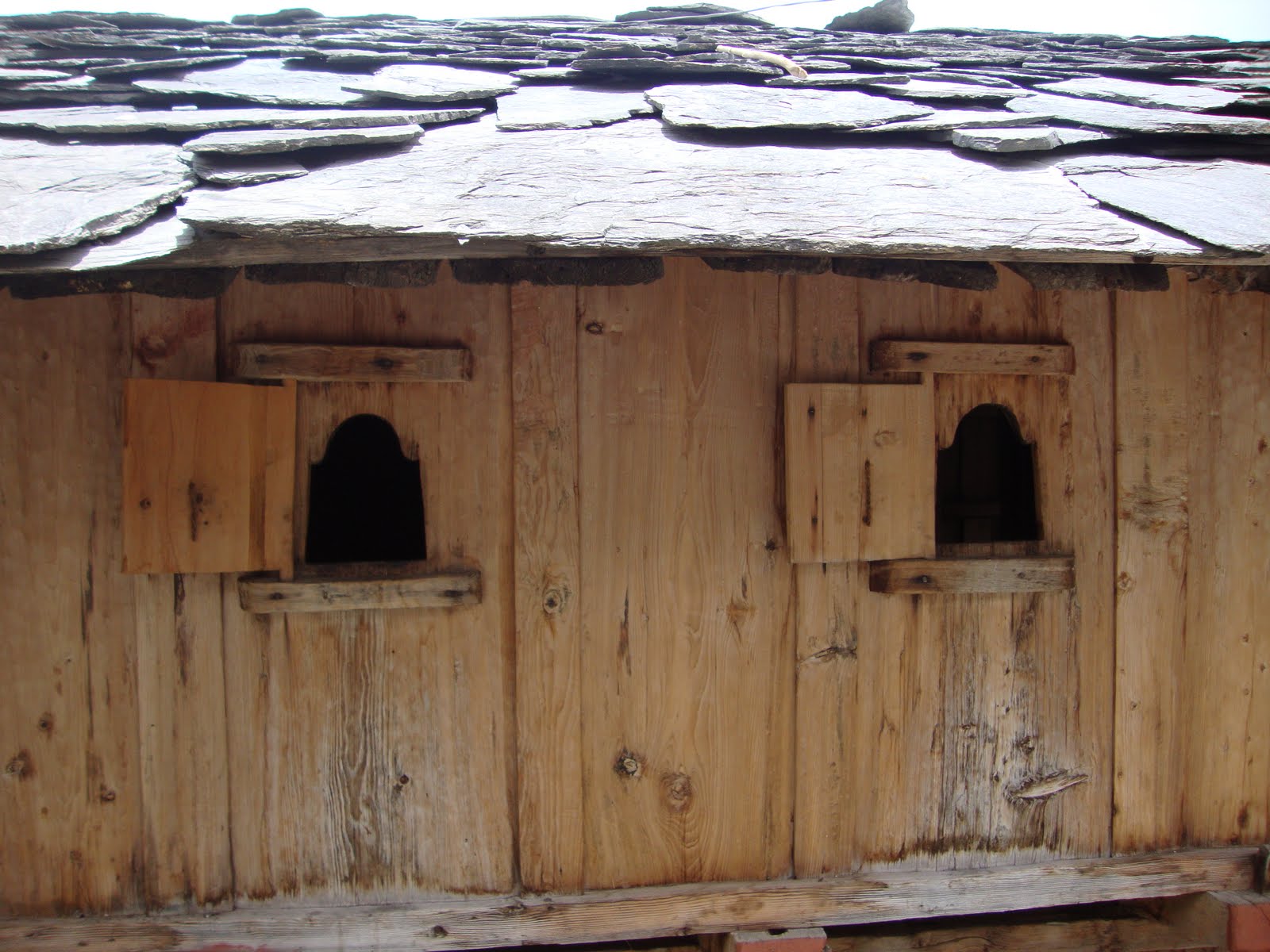
A typical house in the Village of Lakhamandal

Little windows in the houses!
Lakhamandal is approximately 45 kms if you are coming from Chakrata side. Incidentally, once I had crossed Chakrata town I did not see another vehicle till I reached this place. So one has to be sure that your vehicle is in good shape and the petrol tank is full. The road, though metalled, is not in very good shape. And though there are several villages enroute, surprisingly, there is no bus service in this part of Uttarakhand. Compared to this one can get a state road transport corporation bus in almost all remote areas of Himachal.

Monday, 27 September 2010

This Can Happen Only in India

Recently I was travelling from Chakrata in Uttrakhand towards Kharapathar in Himachal and I stopped for tea at a small tea shop in a small village Kwasi, in the Mandi Parishad of Uttrakhand (also known as Uttranchal).

What I saw there was a foundation stone inaugrated by the Agriculture Minster of the Uttrakhand State about the ropeway from Kwasi to Banyana and Khatua villages.


Foundation Stone of a Ropeway

Next to it I saw the ropeway but it was being used by the locals as a clothesline to hang their clothes to dry. I went near it and found that there was no machinery inside.

The Ropeway without the Machinery!

On making further enquires I was told that though a few years back the machinery was installed and the ropeway was functional but only for two months after which the machinery got stolen! How can this happen without the connivance of the local government officials and a few locals as the machinery is huge and one cannot be just put in one's pocket and walk away.

Tuesday, 21 September 2010

A 'Green' Snake

A 'Snake'

I saw this lovely plant which almost looked, at the first glance, like a snake about to strike at something. This was while I was trekking from Kharapathar towards Giri Ganga (a place which is supposedly the source of the river by the same name originating near Kuppar peak. Later on the river merges in the Yamuna river.

Thursday, 22 July 2010

Cliff Swallow at Chakrata


Recently when I was trekking from Chakrata town (Chakrata is in Uttrakhand state of India) to the Tiger Falls, a distance of approximately 12 kms (to and fro) I stopped at a tea stall (the only one on the route) I saw this mud structure hanging from the walls of the shop and I thought that may be it is a termite nest.


The Nest which looked like a termite nest from far

To my surprise I saw a bird going and vanishing in this structure -

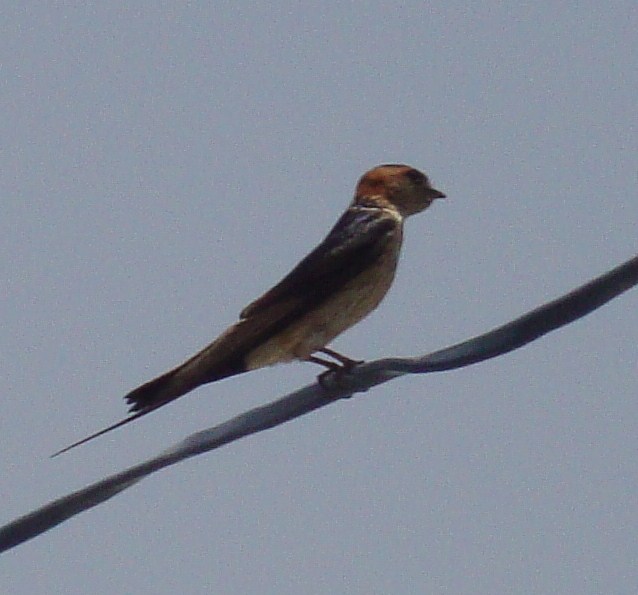
The Cliff Swallow

When I went closer I saw that it is not a termite nest but a mud nest which had a opening where the bird had disappeared. Then I realised that it is a mud nest made of thousands of mud pellets and the bird is probably called the Cliff Swallow. For building their habitat they need a nearby mud source. The food is insects which they capture in flight.

The Nest of the Cliff Swallow

Friday, 18 June 2010

Sunrise at Chakrata

Recently I went on a holiday to Chakrata in Uttrakhand. The weather was nice. I got up at 4:30 in the morning to look at the sunrise (which was beautiful). Unfortunately, in the mountains almost immediately after sunrise the sun becomes very bright and harsh.


Sunrise as seen from my hotel room in Chakrata

Saturday, 29 May 2010

Suru Valley, Ladakh

Among the most beautiful places that I have visited, Suru valley definitely ranks amongst the top few. The Suru valley is in Ladakh province and more specifically in the Kargil district. The valley gets its name by the Suru river. The valley is full of wild flowers, poplars and willows and giving them a stark contrast are the snow capped peaks and massive glaciers. This area also has the two highest peaks of Jammu and Kashmir (the Indian part) - Nun and Kun.

The current of the Suru river is very fast and the water is icy cold. I was chilled to the bone after crossing it!

Friday, 14 May 2010

Bon Monastery in Himachal

Bon Monastery, or Yung Drung Ling, is about 18 kms from Solan in Solan District of Himachal Pradesh. One needs to take a minor road at Ochhaghat that is Narag-Sarahan road. This is the second oldest monastery in the world for the Bon religion. Bon religion is different from Buddhism and is much older that the latter.


The Bon Monastery Complex

The Main Temple

An interesting variation from the Buddhist tradition is that in Buddhism you always go clockwise when you circle a temple while praying whereas in the Bon religion you go anticlockwise.

Painting

Inside the Main Temple


Huge Conch used during prayers


An interesting motif!


Made of Butter!


Decoration on the wall


A Tankha Painting


Another Temple Complex of Bon


Another Building at the complex

The complex houses a well built library having scriptures of Bon religion. It also has a school where the students study the Bon religion.

Decorated roof with Bon motifs

The whole complex is quite beautiful is is definitely worth visiting. However, there is no place to stay here and one has to probably go and stay in Solan. There are no eateries also that I could see.